

If your car’s infotainment system feels more like a sluggish 2010 tablet than a modern command center, you are not alone. For years, upgrading your car audio meant choosing between loud, distorted bass or a frustrating touchscreen that lagged every time you tried to change a song.
Fast forward to 2026, and the aftermarket car audio landscape has undergone a massive technological shift. The focus has moved completely away from simple volume upgrades toward intelligent, software-driven fidelity and seamless OEM (Original Equipment Manufacturer) ecosystem integration. Today’s car audio trends of 2026 are defined by lightning-fast wireless connectivity, high-definition spatial acoustics, and interfaces that merge beautifully with your vehicle’s factory computer networks.
Whether you cruise along the Pacific Coast Highway in California or navigate daily stop-and-go metro traffic, upgrading your dashboard is no longer just about avoiding speed-bump skipping—it’s about creating an immersive acoustic sanctuary.
Key Takeaways at a Glance
| Trend | Core Technology | Primary Benefit |
| Dolby Atmos & Spatial Audio | Multi-channel object tracking via CarPlay | Immersive 3D soundscapes inside the cabin |
| Software-Defined DSPs | High-bitrate internal Digital Signal Processors | Instant acoustic correction matching your car’s exact shape |
| Floating HD Touchscreens | 9- to 11-inch capacitive 720p displays | Modern, high-visibility layout matching luxury vehicle aesthetics |
| Next-Gen OEM Integration | CAN-bus and advanced iDatalink Maestro | Preserves all factory cameras, safety alerts, and vehicle settings |
| EV-Optimized Audio Componentry | Ultra-efficient, lightweight Class D architecture | Premium, audiophile sound quality with zero impact on driving range |
The Top 10 Car Audio Trends of 2026
- Aftermarket Dolby Atmos and Spatial Audio Integration
For the longest time, spatial audio was restricted to high-end home theater systems or exclusive luxury factory options. In 2026, that boundary has vanished. Leading manufacturers have unveiled vehicle audio integration setups that support true multi-channel object tracking directly over Apple CarPlay and Android Auto.
Receivers like Pioneer’s flagship series now stream spatial content natively. Instead of separating audio into simple left and right channels, spatial audio treats every instrument and vocal track as an independent object positioned in a 3D environment. The result? A soundstage that feels like it extends far beyond the physical doors of your vehicle.
- Built-In, Multi-Core Digital Signal Processing (DSP)
A common mistake we see is car enthusiasts throwing high-end speakers into an untreated vehicle doors without considering cabin acoustics. Glass reflects high frequencies, while dense plastic panels soak up the mid-bass, causing massive tonal imbalance.
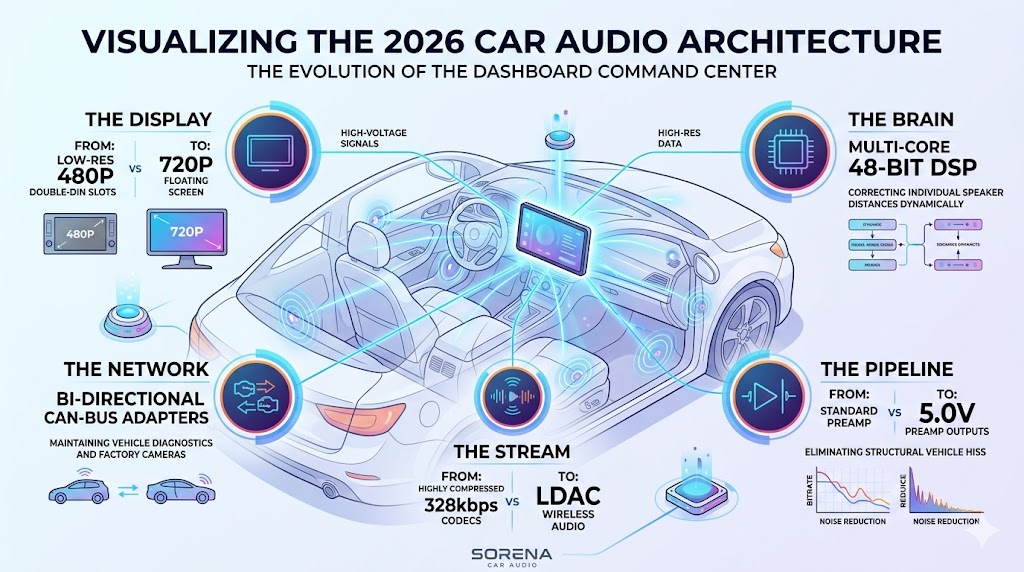
To fix this, the top car audio head units of 2026 now feature integrated multi-core DSPs with up to 56 bands of parametric equalization and granular time correction. Manufacturers like Sony and Alpine have engineered their head units to act as computational acoustic platforms. By calculating the exact distance between your head and each speaker down to the millimeter, these smart receivers eliminate time-arrival delay, anchoring a perfect center image directly on your dashboard.
- Giant Floating HD Touchscreens with Sub-10 Second Boot Times
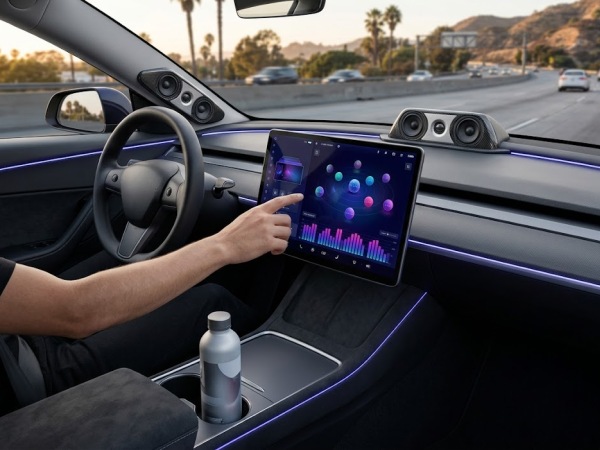
The traditional, small double-DIN screen tucked low in the dashboard is officially history. Massive “floating” displays ranging from 9 to 11 inches—such as the Alpine Halo 11 or Kenwood Excelon Series—are dominating the market.
These high-resolution, 720p capacitive screens use advanced optical bonding to eliminate daytime glare, a critical upgrade for sunny Southern California drivers. Best of all, upgraded interior processors mean wireless CarPlay and Android Auto boot up and connect in under 10 seconds from the moment you turn the key.
- Flawless Network Integration via Advanced CAN-bus Protocols
In modern cars, the head unit isn’t just a radio; it’s the brain of the vehicle. If you pull it out carelessly, you risk losing your steering wheel buttons, climate controls, backup cameras, or tire-pressure monitoring displays.
The latest aftermarket car audio gear handles this gracefully through deep CAN-bus (Controller Area Network) data integration. Utilizing modules like the iDatalink Maestro, 2026 head units communicate directly with your car’s central computer. This means you can comfortably swap your factory radio while maintaining every single luxury convenience, right down to your vehicle’s safety radar and radar-guided parking lines.
- High-Efficiency, Space-Saving Class D Amplification
Space inside modern vehicles is at an absolute premium. The days of mounting massive, heavy heat-sink amplifiers across your trunk floor are long gone. The current market has shifted drastically toward ultra-compact Class D amplification architectures.
Modern Class D amps run cool, convert up to 90% of their electrical draw into pure acoustic power, and fit neatly inside the empty voids behind your glovebox or under a seat. Some top-tier 2026 head units even build a micro-Class D amplifier straight into the receiver chassis, offering incredible punch without requiring a separate standalone module.
- EV-Specific, Low-Power Audio Architectures
Electric Vehicles (EVs) present two unique challenges for car audio: they have no engine noise to mask acoustic flaws, and every watt of electrical draw can technically impact driving range.
Because of this, 2026 has seen a massive surge in EV-optimized components. These systems combine feather-light, eco-conscious materials with highly efficient power management profiles. Leading audio innovators like Dirac have partnered with major hardware brands to create software frameworks that extract deep, full-range authority out of smaller, low-draw speakers. This gives EV owners studio-level audio depth without placing any stressful drag on the high-voltage traction battery.
- Ultra-High-Resolution Wireless Audio Streaming (LDAC & aptX HD)
Audiophiles used to argue that wireless streaming ruined sound quality. While that was true during the early days of compressed Bluetooth, a high-res audio car setup in 2026 tells a completely different story.
Standard Bluetooth (SBC): 328 kbps (Heavy Compression)
High-Res Wireless (LDAC): 990 kbps (Studio Quality)
Modern receivers natively support high-bitrate wireless streaming codecs like Sony’s LDAC and Qualcomm’s aptX HD over Wi-Fi bands. Pumping audio at up to 990 kbps, these systems transfer three times more data than standard Bluetooth, maintaining the micro-details, vocal textures, and crisp instrument separation of your high-fidelity files.
- Voice-Led Interaction Driven by Agentic AI
Browsing through lists of artists or typing on a screen while navigating highway traffic is a significant safety hazard. In 2026, voice control has evolved from clunky, rigid phrase-matching into fluid conversation, thanks to Agentic AI assistants integrated directly into modern smart car receivers.
Platforms powered by conversational voice models allow you to speak naturally. Instead of shouting specific commands like “Play Track 4,” you can simply say, “Find that live acoustic album I was listening to yesterday, skip the intro, and pump the bass a little bit.” The AI understands the context, adjusts the internal DSP curves, and handles the media retrieval flawlessly without taking your eyes off the road.
- High-Voltage Preamp Outputs for Ultra-Low Noise
If you intend to build a high-end system with external amplifiers and dedicated subwoofers, the signal purity leaving your head unit is everything. Low-quality receivers output low preamp voltage, forcing you to turn up your amplifier’s gain controls, which introduces a hissing background noise.
The elite head units of 2026 feature 5.0-volt, gold-plated RCA pre-outs. This incredibly clean, high-voltage signal pushes past vehicle electrical interference effortlessly. It feeds your amplifiers a pristine, uncorrupted audio stream, ensuring your music remains crystal clear even when you turn the volume up to concert levels.
- Vehicle-Specific Modular Enclosures
No one wants a massive, ugly generic box taking up all their trunk or cargo space. The modern standard focuses on vehicle-specific stealth enclosures. These modular enclosures are custom-molded to fit the exact contours of your car’s trunk side-panels or under-seat cavities. Using durable, color-matched composites, they blend invisibly into your vehicle’s factory interior while providing the precise air volume your subwoofers need to deliver tight, accurate low-end frequencies.
Navigating the Right Upgrade Path
Upgrading your system doesn’t mean you have to replace every component at once. In our experience, a structured, step-by-step approach yields the best acoustic results for your investment:
- The Hub: Upgrade your primary head unit first to secure modern smartphone integration, clean preamp signals, and crucial DSP tuning capabilities.
- The Acoustic Foundation: Install high-quality front component speakers paired with comprehensive door sound deadening to eliminate unwanted sheet-metal vibrations.
- The Power & Punch: Add a compact, multi-channel DSP amplifier and a stealth subwoofer to fill out the lower frequencies and bring the entire soundstage to life.
Frequently Asked Questions
Will an aftermarket head unit void my vehicle’s factory warranty?
No. Under the Magnuson-Moss Warranty Act in the United States, a manufacturer cannot void your vehicle’s warranty simply because you installed an aftermarket part. As long as the system is integrated correctly using proper plug-and-play wiring harnesses without cutting the factory loom, your warranty remains completely safe.
Can I keep my steering wheel controls and factory backup camera?
Yes, absolutely. By using a modern CAN-bus integration bridge like the iDatalink Maestro, your new aftermarket head unit will communicate directly with your car’s factory network, fully retaining your steering wheel buttons, climate controls, and multi-angle camera views.
Do I really need an external amplifier if my new head unit has a built-in one?
While modern head units offer decent built-in power (typically 15-22 watts RMS per channel), an external Class D amplifier provides the clean, uncompressed current needed to drive high-quality aftermarket speakers efficiently. An external amp prevents distortion at high volumes and brings out the full dynamic range of your music.
Is professional installation necessary for these 2026 systems?
While basic plug-and-play kits exist, 2026 systems rely heavily on complex data networks, vehicle-specific tuning software, and sophisticated DSP alignment. Having a professional technician calibrate your time delays and crossover points ensures you get the absolute maximum performance out of your audio investment.
Ready to Transform Your Drive?
Reading about high-fidelity sound is one thing, but experiencing a perfectly staged, Dolby Atmos-equipped cabin tailored exactly to your ears is an entirely different world. If you are ready to give your dashboard the premium upgrade it deserves, avoid the guesswork of DIY installation.
For drivers in Southern California, Sorena Car Audio is the premier, professional center located in Irvine, CA. Their expert technicians specialize in precision integration, premium sound deadening, and custom DSP tuning for luxury vehicles, daily drivers, and electric vehicles alike. Stop by their Irvine showroom to explore the finest 2026 head units in person and experience what true automotive high-fidelity sounds like.
Contact Sorena Car Audio today to schedule a private consultation and fortify your vehicle with elite transparent armor.
We offer all car audio services
List of Services:
- DashCam
- Ambient Lighting
- Starlight
- Windows Tinting
- Armoring & Ballistic Protection
- Apple CarPlay
- Dash Upgrade
- Android Auto
- Paint Protection Film (PPF)
- Sound Deadening – Sound Proofing
- Front and Rear Parking Sensors
- Blind Spot Radars
- Car Ceramic Coating
- HD Backup Camera
- Mirror Monitor
- Subwoofer Integration
- Classic Car Audio
- Wheel Well Sound Deadening
- Marine Audio System
- Marin Audio
- Flipdown Monitor
- Bluetooth Integration
- Rear Entertainment System
- Steering Wheel Upgrade
- Car Wrapping
- Interior Suede Alcantara Wrap
- Alcantara Suede Headliner
- ECU Tuning
- Center Console Safe Installation
Leave A Comment