

Nothing matches the feeling of cruising down a California highway with a newly upgraded car audio system. The crisp highs, the rich mid-range, and that deep, chest-thumping bass completely transform your driving experience. But if you just installed a high-powered amplifier and a couple of heavy-duty subwoofers, you might be asking your vehicle for more electrical power than it can actually give.
Many car audio fans do not realize that their factory electrical system was only engineered to run basic factory components like the headlights, the standard radio, and the air conditioning. When you add an aftermarket system drawing hundreds or thousands of watts, your factory charging system can quickly become overwhelmed.
If your electrical components are working too hard, your system will let you know. Recognizing the symptoms of an overworked charging system early can save you from a ruined battery, a fried amplifier, or getting stranded on the side of the road.
Key Takeaways at a Glance
| Warning Sign | What It Means | Potential Consequence |
| Flickering Headlights | Sound system is stealing power from essential vehicle lighting. | Reduced night visibility; potential traffic violation. |
| Voltage Drops & Restarts | System voltage dropping well below the standard 13.5–14.8 volts. | Head unit resets; amplifier entering protect mode. |
| Whining or Grinding Noise | Internal alternator bearings or rectifiers under extreme structural strain. | Mechanical alternator failure; snapped serpentine belt. |
| Slow Power Accessories | Power windows, seats, and AC fans operating sluggishly. | Total accessory failure while driving. |
| A Dead Battery | Alternator cannot keep up, forcing the battery to drain while driving. | Stranded with a vehicle that will not start. |
The Root of the Problem: Understanding Electrical Load
Your car battery’s primary job is simply to crank the engine. Once the vehicle is running, the alternator takes over as the primary generator, supplying direct current (DC) electricity to power the electronics and recharge the battery.
Standard factory alternators typically output between 70 to 120 amps. If you install a modern multi-channel amplifier demanding significant juice, your total draw can easily exceed your alternator’s maximum threshold. When this threshold is crossed, your electrical system begins exhibiting specific warning signs.
Let’s look at the five clear warning signs that your car’s factory charging system is losing the battle against your new sound system.
- Headlights and Dash Lights Flickering with the Bass Hit
This is the single most common sign of an overworked electrical system. If you notice your headlights or dashboard display dimming every single time a heavy bassline drops, your amplifier is starving for power.
Subwoofers require rapid, massive surges of electrical current to produce low-frequency notes. When the alternator cannot supply this current instantly, it pulls raw energy directly from the rest of the electrical grid. This causes a sudden drop in voltage across your entire vehicle, leading to noticeably dimming lights.
- Frequent Voltage Drops and Stereo Resets
A healthy, running vehicle should maintain a steady charging voltage between 13.5 and 14.8 volts. You can easily keep track of this by using a digital voltmeter integrated into your dashboard or your aftermarket head unit.
If your voltage constantly plummets into the 11- or 12-volt range when you turn up the volume, your alternator is entirely maxed out. When the voltage drops too low, your modern touchscreen head unit or digital signal processor (DSP) may suddenly reboot. Furthermore, your amplifier might slip into “Protect Mode” to prevent permanent internal damage from low voltage.
- High-Pitched Whining Noises from the Engine Bay
Have you started hearing an unusual, high-pitched whining or whirring noise that changes pitch when you step on the gas pedal? While this can sometimes be caused by poorly grounded RCA cables creating ground loop interference through your speakers, it can also be a physical cry for help from your engine bay.
When an alternator is forced to run at 100% capacity for extended periods, it generates extreme internal heat. This structural strain can cause the internal voltage regulator or rectifier diodes to struggle, or it can cause the internal bearings to wear down prematurely. If the noise sounds like metal-on-metal grinding, your alternator’s internal components are failing.
- Sluggish Windows and Weak Air Conditioning Fans
Your car’s electrical grid prioritizes vital functions like the fuel pump and ignition system. When power becomes scarce because your amplifier is consuming the lion’s share, non-essential luxury accessories are the first to suffer.
Take notice of how your vehicle behaves while your music is playing loud:
- Your power windows may roll up and down significantly slower than usual.
- Your cabin air conditioning blower fan might visibly lose speed or sound weaker during heavy bass tracks.
- Your heated seats or power mirrors may become slow or completely unresponsive.
If your power windows feel like they are fighting through molasses, it is because they are not getting the steady amperage they need to run their motors efficiently.
- A Repeatedly Dead Battery
A common automotive myth is that a dead battery always means you need a new battery. However, a dead battery is often just a symptom of an underlying alternator issue.
If your alternator cannot handle the combined load of your car’s factory electronics and your aftermarket amplifiers, your vehicle will start pulling power directly from the battery while you are driving. This means your battery is actively draining instead of charging while the engine is running. If you turn off your car after a long drive and it refuses to start up again without a jumpstart, your alternator failed to maintain the necessary charge.
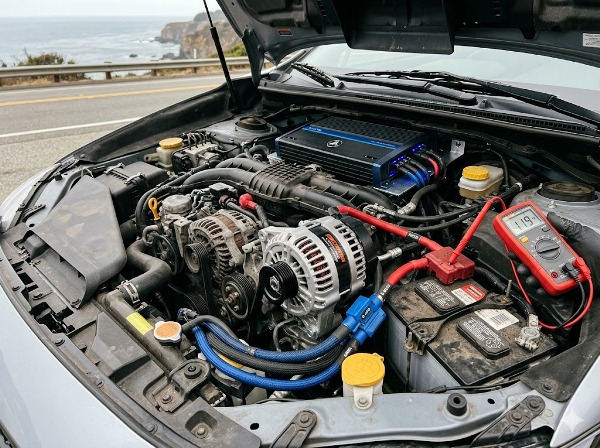
How to Fix an Overloaded Electrical System
If your car is showing any of these warning signs, ignoring them will only lead to more expensive repairs down the road. Fortunately, there are several proven ways to upgrade your power infrastructure to handle your passion for high-quality sound.
The Big Three Upgrade
Before buying expensive new parts, many enthusiasts perform the “Big Three” wiring upgrade. This involves replacing three critical factory electrical cables with heavy-gauge, high-quality copper wiring (typically 0-gauge or 1/0 AWG):
- The alternator charging wire to the battery positive terminal.
- The engine block ground wire to the vehicle chassis.
- The battery negative terminal ground wire to the vehicle chassis.
Upgrading these paths minimizes electrical resistance, allowing current to flow much more freely throughout your vehicle.
Adding a Car Audio Capacitor vs. a Second Battery
For smaller power deficits, a car audio capacitor can help store a temporary electrical charge and discharge it instantly during quick bass hits, relieving some stress from your headlights. However, capacitors do not generate new power; they only smooth out quick ripples.
If your system draws massive power continuously, adding a secondary AGM (Absorbed Glass Mat) battery or a dedicated lithium car audio battery in the trunk is a much better solution for sustaining long, demanding musical notes.
Installing a High-Output Alternator
When you are running high-end, competition-level amplifiers, the ultimate solution is replacing your factory alternator with a dedicated high-output alternator. These aftermarket units are specifically rewound to produce anywhere from 200 to 350+ amps of current, ensuring your sound system gets all the clean power it needs without affecting your vehicle’s factory reliability.
Keep in mind that modern automotive electrical networks are highly complex. Blindly adding parts without calculating your system’s actual amperage draw can lead to blown fuses, damaged factory computers, or electronic errors.
Frequently Asked Questions
Can a powerful sound system completely ruin my factory alternator?
Yes. Running a factory alternator at or near its maximum capacity for extended periods creates immense thermal heat. This extra heat will eventually burn out the internal voltage regulator or destroy the stator windings, leading to total alternator failure.
Will a capacitor fix my dimming headlights?
A capacitor acts like a small, fast-acting temporary storage reserve. It works well for minor power dips caused by quick, short bass notes. However, if your headlights stay dim during prolonged bass rolls, a capacitor will not help because your alternator lacks the total output required to run the system.
How do I figure out how many amps my sound system draws?
A good rule of thumb is to take the total RMS (Root Mean Square) wattage of your amplifiers, divide it by your vehicle’s average voltage (around 13.8 volts), and multiply by your amplifier’s efficiency rating. For example, a 1,000-watt Class D amplifier (roughly 80% efficient) draws around 90 amps of current at maximum volume.
Is it safe to drive my car if the alternator is straining?
It is risky. If your alternator fails completely while you are driving, your car will rely solely on the battery. Once the battery drains, the engine’s ignition system will shut off, causing your car to stall unexpectedly in the middle of traffic.
Get Professional Electrical Routing in Southern California
Designing an elite car audio system requires a careful balance between acoustic precision and raw electrical engineering. If your headlights are flickering or your system is dropping voltage, do not risk damaging your vehicle’s factory computers with guesswork or DIY shortcuts.
If you are located in Southern California, bring your vehicle to the certified integration experts at Sorena Car Audio in Irvine. With over 14 years of expert experience working on high-end vehicle platforms and complex marine audio projects, our team specializes in precision power distribution, custom high-output alternator integration, and flawless electronic performance. We can accurately test your vehicle’s charging system, diagnose hidden power bottlenecks, and safely engineer an upgraded electrical infrastructure tailored to your exact audio setup.
Contact Sorena Car Audio in Irvine or get in touch with our team today to keep your music loud and your electrical system healthy.

We offer all car audio services
List of Services:
- DashCam
- Ambient Lighting
- Starlight
- Windows Tinting
- Armoring & Ballistic Protection
- Apple CarPlay
- Dash Upgrade
- Android Auto
- Paint Protection Film (PPF)
- Sound Deadening – Sound Proofing
- Front and Rear Parking Sensors
- Blind Spot Radars
- Car Ceramic Coating
- HD Backup Camera
- Mirror Monitor
- Subwoofer Integration
- Classic Car Audio
- Wheel Well Sound Deadening
- Marine Audio System
- Marin Audio
- Flipdown Monitor
- Bluetooth Integration
- Rear Entertainment System
- Steering Wheel Upgrade
- Car Wrapping
- Interior Suede Alcantara Wrap
- Alcantara Suede Headliner
- ECU Tuning
- Center Console Safe Installation
Leave A Comment