

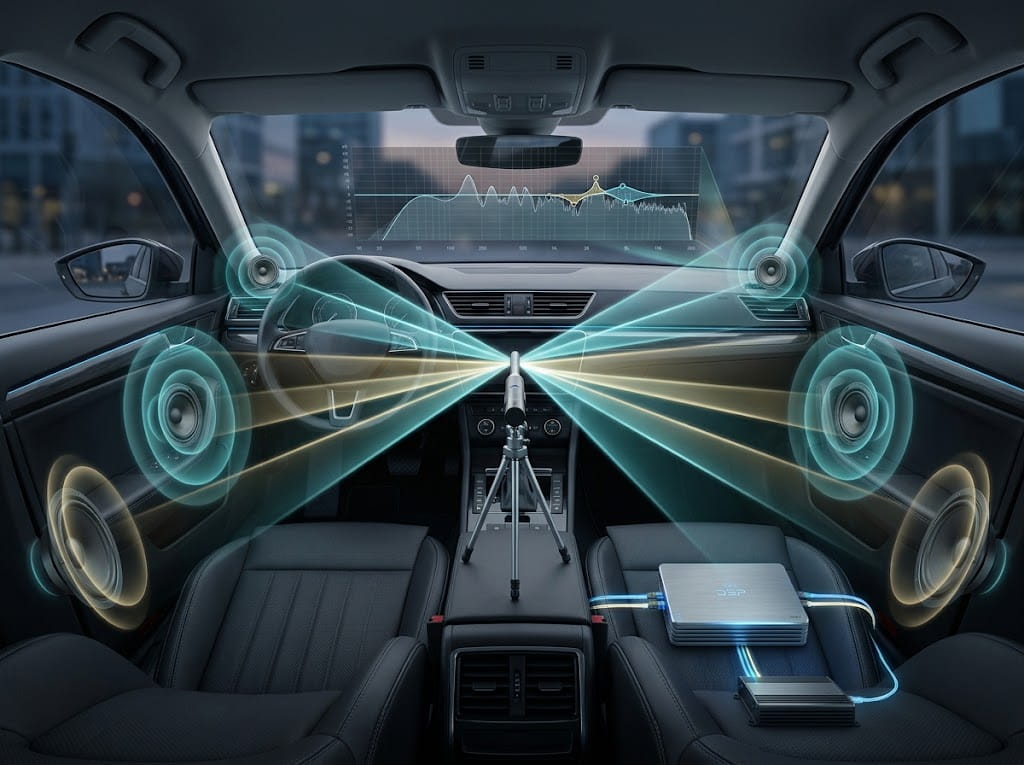
Factory car audio systems face an uphill battle from day one. Unlike a living room or a recording studio, an automotive cabin features asymmetrical seating, reflective glass windows, sound-absorbing upholstery, and off-axis speaker locations. Even premium aftermarket speakers often sound harsh, hollow, or muddy because the vehicle’s acoustic environment actively distorts the audio signal before it reaches your ears.
A Digital Signal Processor (DSP) solves this fundamental limitation. Instead of relying on crude bass and treble knobs, a DSP intercepts audio signals, converts them into digital data, and applies precision calibration tools—including time alignment, active crossovers, and parametric equalization. This article explains how a DSP functions, breaks down the core acoustic problems it resolves, and details how to determine whether your system requires standalone digital processing.
Key Takeaways
| Core Insight | Practical Impact |
|---|---|
| Acoustic Cabin Correction | Resolves reflections and phase cancellations caused by off-axis speaker placement and uneven cabin geometry. |
| Microsecond Time Alignment | Delays nearer speakers so sound waves from all channels reach the driver’s ears at the exact same instant, creating a centered soundstage. |
| Active Crossover Control | Delivers precise frequency bands directly to dedicated drivers, eliminating the power loss and phase shift common to passive crossovers. |
| Parametric EQ Precision | Pinpoints and cuts acoustic peaks or boosts dips at targeted frequencies with adjustable bandwidth (Q factor). |
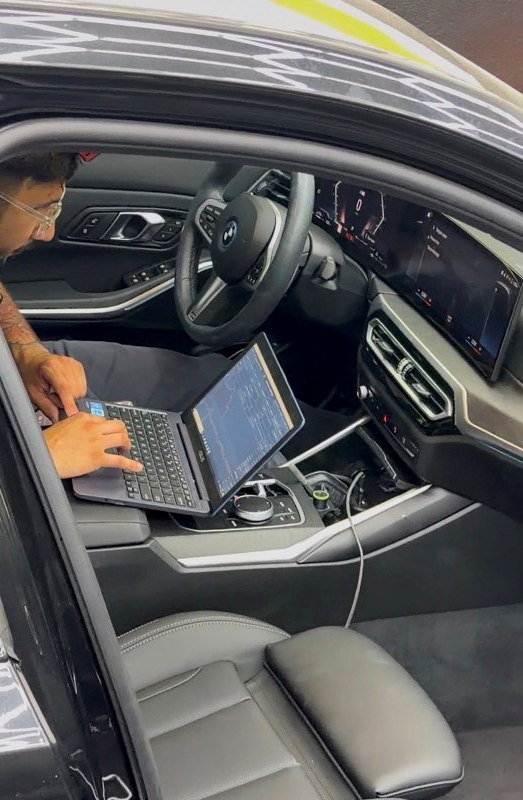
What Is a Digital Signal Processor (DSP) in Car Audio?
A Digital Signal Processor (DSP) is a dedicated microprocessor designed specifically to manipulate audio signals mathematically in real time. In an automotive setup, it acts as the acoustic brain between your source unit (the head unit or factory radio) and your amplifiers.
[Audio Source / Factory Radio]
             │
             ▼
[Analog-to-Digital Converter (ADC)]
             │
             ▼
[DSP Core: Time Alignment • Active Crossovers • Parametric EQ]
             │
             ▼
[Digital-to-Analog Converter (DAC)]
             │
             ▼
[Multi-Channel Amplifiers] ──► [Tweeters / Midrange / Midbass / Subwoofer]
The DSP receives multi-channel audio—either through low-level RCA inputs or high-level speaker wire inputs—and converts that analog voltage into digital code using an Analog-to-Digital Converter (ADC). Once digitized, the processor applies complex mathematical calculations to adjust timing, frequency distribution, and phase. Finally, high-grade Digital-to-Analog Converters (DACs) translate the modified data back into clean analog pre-amp signals routed to your amplifiers.
What Does a DSP Actually Do? 4 Core Audio Corrections
Upgrading speakers without processing often yields disappointing results because speakers simply reproduce the signal they receive into an acoustically compromised space. A DSP addresses four physical barriers inherent to vehicle cabins.
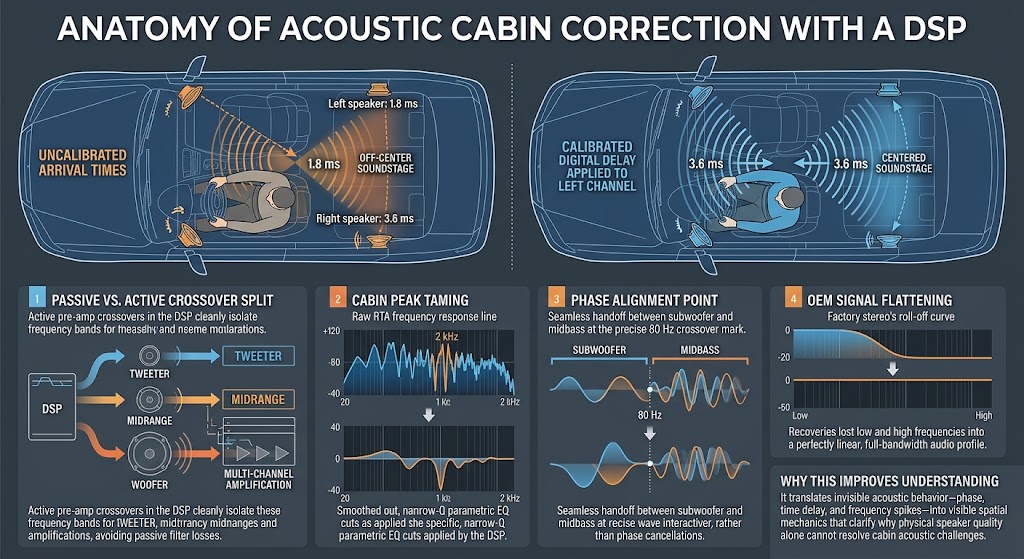
1. Time Alignment (Signal Delay)
In a standard vehicle, the driver sits substantially closer to the front-left speaker than the front-right speaker. Because sound travels through air at approximately 1,125 feet per second (343 meters per second), sound from the driver-side speaker arrives at your left ear roughly 1 to 3 milliseconds before sound from the passenger-side speaker reaches your right ear.
This millisecond gap destroys the stereo image. The brain interprets arrival time to locate sound sources; as a result, audio collapses against the driver-side door panel.
A DSP allows calibration specialists to delay individual channels by microsecond increments (or fractions of a millimeter). By delaying the speakers closest to you, sound from every corner of the vehicle reaches your ears simultaneously. The physical speakers seem to disappear, producing a focused soundstage across the center of your dashboard—as if the vocalist were performing directly on top of your instrument cluster.
2. Digital Active Crossovers
Traditional speaker setups often utilize passive crossover networks—small boxes filled with copper inductors and capacitors that divide frequencies after amplification. Passive crossovers introduce significant signal insertion loss, generate phase rotation around the crossover points, and offer zero adjustability once installed.
A DSP implements active digital crossovers before amplification. This architecture allows you to:
- Assign Exact Cutoff Points: Send exclusively 3,500 Hz and above to tweeters, 250 Hz to 3,500 Hz to midranges, 80 Hz to 250 Hz to midbass drivers, and sub-80 Hz to subwoofers.
- Select Slope Steepness: Choose crossover slopes ranging from 6 dB/octave to 48 dB/octave (such as Butterworth or Linkwitz-Riley alignments) to protect delicate drivers while eliminating acoustic overlap.
- Prevent Distortion and Thermal Strain: Restricting low frequencies from reaching tweeters and midranges increases power handling and lowers Total Harmonic Distortion (THD).
3. Parametric Equalization (PEQ)
Standard factory radios offer basic bass, midrange, and treble adjustments. Even aftermarket graphic equalizers only allow adjustments at fixed frequency points (such as 1 kHz or 2.5 kHz) with fixed bandwidths.
Vehicle interiors create erratic frequency response curves. Hard glass windshields reflect high frequencies (creating harsh spikes), while door cavities can cancel out 150 Hz to 200 Hz midbass energy entirely. A DSP provides fully parametric equalization across 30 or more bands per channel. A parametric EQ allows precision control over three distinct parameters:
- Center Frequency: Dial in the exact frequency causing an issue (e.g., 2,350 Hz).
- Gain (Boost/Cut): Raise or lower only that targeted frequency in fractions of a decibel.
- Q Factor (Bandwidth): Adjust how wide or narrow the equalization curve is, correcting acoustic anomalies without altering adjacent frequencies.
4. OEM De-Equalization and Channel Summing
Modern vehicles often integrate climate controls, safety alerts, hands-free calling, and telematics directly into the factory infotainment screen, making radio replacement impractical or impossible. Furthermore, factory amplifiers frequently apply built-in equalization curves designed to protect cheap paper-cone speakers, heavily cutting deep bass as the volume increases to prevent blowing the drivers.
Advanced DSP units equipped with OEM integration tools can:
- Flatten Factory Curves: Analyze the factory signal and apply an inverse EQ curve to restore a flat, high-fidelity audio spectrum.
- Sum Split Signals: Combine actively divided factory signals (such as separate factory tweeter and door woofer feeds) back into a full-bandwidth stereo audio signal ready for clean amplification.
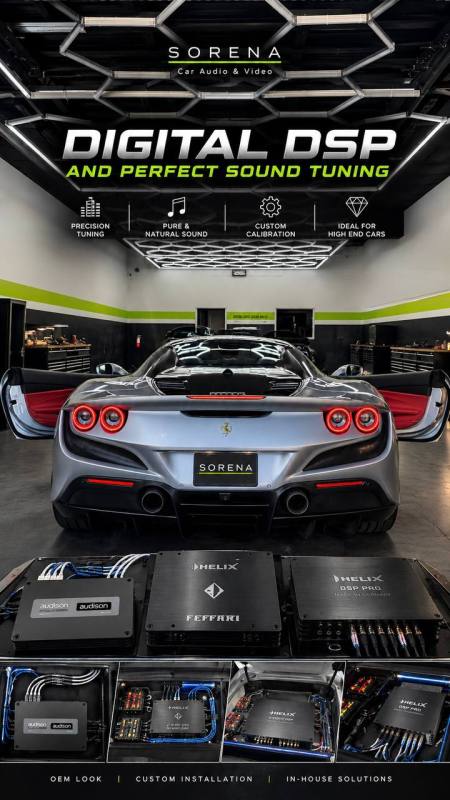
DSP Architecture: Standalone DSP vs. DSP Amplifier
When adding digital processing to a car audio build, systems typically follow one of two physical architectures:
| Feature / Metric | Standalone DSP | DSP Amplifier (All-in-One) |
|---|---|---|
| Form Factor | Dedicated processing unit; requires external amplifiers | Integrated processor and multi-channel amplifier in one chassis |
| Output Channels | 8 to 16 processed RCA pre-outs | 4 to 12 powered speaker outputs (often with 2–4 extra processed RCA outs) |
| Installation Footprint | Requires more space and multi-cable interconnects | Compact; ideal for under-seat or stealth trunk mounting |
| System Flexibility | Maximum; swap amplifiers or increase wattage freely | Constrained to internal channel wattage and configuration |
| Best Suited For | High-end competition builds and complex active 3-way setups | Factory system integration, daily drivers, and space-constrained cabins |
When Does a Sound System Actually Need a DSP?
Not every car audio setup requires a dedicated digital processor. Understanding your system goals ensures you invest where acoustic returns are highest.
Is a DSP right for your current setup?

[System Goal]
     │
     ├─► Replacing blown factory speakers with budget drop-ins?
     │         └─► NO: Standard head unit or small amplifier suffices.
     │
     ├─► Adding only a basic subwoofer for low-end fill?
     │         └─► NO: Amplifier's built-in low-pass filter (LPF) is adequate.
     │
     ├─► Running a multi-way active front stage (separate tweeters/midranges)?
     │         └─► YES: DSP is mandatory to control crossover slopes and time delay.
     │
     └─► Retaining modern factory screen while adding high-performance gear?
               └─► YES: DSP required for signal de-equalization and summing.
Situations Where a DSP Is Essential:
- Fully Active Front Stage Configurations: Running separate channels of amplification for tweeters, midrange drivers, and midbass woofers without passive crossover boxes.
- Modern Factory Head Unit Retention: Late-model vehicles where removing the factory dashboard screen is impossible due to integrated vehicle controls.
- Targeting Acoustic Realism: Systems where the listener expects an authentic soundstage with precise vocal placement and balanced tonality across all genres.
Situations Where You Can Skip a DSP:
- Entry-Level Coaxial Upgrades: Swapping factory speakers for direct drop-in coaxial replacements powered by the factory head unit.
- Bass-Only Additions: Adding a single monoblock amplifier and subwoofer to an otherwise stock system, where the amplifier’s onboard low-pass filter and bass knob provide sufficient control.
Common DSP Mistakes and Practical Calibration Pitfalls
Even premium DSP hardware will sound poor if calibrated incorrectly. Professional audio technicians frequently encounter several common configuration errors:
- Treating EQ as an Amplifier (Over-Boosting): Applying large positive boosts (+6 dB or more) at dip frequencies often creates digital clipping and strains amplifiers. Dips in a vehicle cabin are frequently acoustic phase cancellations; pumping more electrical power into a cancellation node will not resolve the acoustic void. Industry standard practice prioritizes subtractive equalization—cutting frequency peaks rather than boosting nulls.
- Incorrect Microphone Placement During RTA Analysis: Real-Time Analyzers (RTAs) and calibrated measurement microphones must measure response at the driver’s true ear level. Taking a single static measurement or placing the mic on the center console produces inaccurate data that degrades real-world listening quality.
- Ignoring Electrical Phase Alignment: Setting crossover cutoffs without verifying acoustic phase coherence at the transition points causes destructive interference, where tweeters and midranges cancel each other out near crossover frequencies.
Frequently Asked Questions
Can a DSP make cheap factory speakers sound good?
A DSP can noticeably clean up factory speakers by correcting peak frequencies and stripping out built-in factory distortion curves. However, processing cannot overcome mechanical limitations. Cheap paper cones with small voice coils will still suffer from limited dynamic range, thermal compression, and early mechanical distortion at higher volumes. A DSP maximizes driver performance, but it cannot alter hardware physics.
What is the difference between an equalizer and a DSP?
An equalizer only adjusts the amplitude (volume) of predetermined frequency bands. A DSP encompasses equalizers but adds time alignment, active crossover slope selection, phase rotation, input signal summing, and signal routing. An equalizer adjusts tone; a DSP reshapes the entire acoustic geometry and signal behavior of the vehicle.
Does adding a DSP require professional tuning tools?
Basic setup can be achieved using manufacturer software presets, but realizing the full value of a DSP requires measurement equipment. Accurately configuring time delay, active crossover points, and parametric EQ bands generally requires a calibrated measurement microphone, a Real-Time Analyzer (RTA), and an understanding of acoustic phase relationships.
Will a DSP drain my car battery?
A standalone DSP draws minimal electrical current—typically between 1 and 2 amps—similar to a dashcam or radar detector. It powers on and off via the vehicle’s remote turn-on lead or DC offset detection. If you choose an integrated DSP-amplifier combo, the current draw is determined by the amplifier’s wattage rating rather than the digital processing circuit.
Optimize Your Vehicle’s Acoustic Potential
A high-performance car audio system is only as capable as its signal processing. By addressing the acoustic limitations of automotive cabins—correcting arrival times, directing clean frequency bands, and leveling harsh cabin reflections—a Digital Signal Processor transforms disparate speakers into a coherent, high-fidelity soundstage.
Whether integrating premium amplification into a modern factory dashboard or building a fully active multi-way system from the ground up, proper configuration determines final audio clarity. Explore how precision calibration and system design can transform your daily drive by reviewing the expert integration and tuning options available through Sorena Car Audio professional services, or consult with an experienced installer to audit your current signal path.
Author Information & Trust Section
This guide was prepared using trusted industry acoustic engineering standards, real-world installation methodologies, and verified automotive signal processing practices.
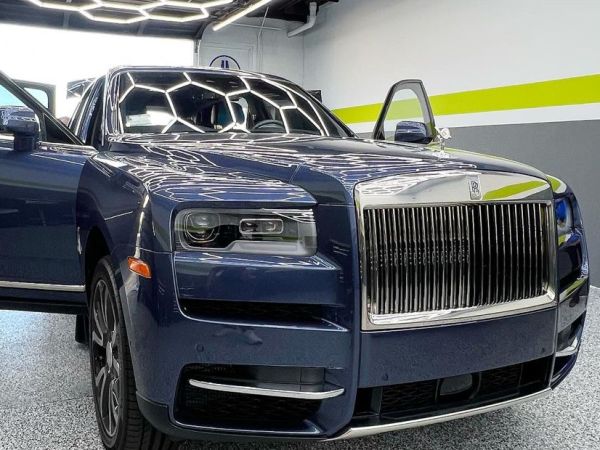
We offer all car audio services
List of Services:
- DashCam
- Ambient Lighting
- Starlight
- Windows Tinting
- Armoring & Ballistic Protection
- Apple CarPlay
- Dash Upgrade
- Android Auto
- Paint Protection Film (PPF)
- Sound Deadening – Sound Proofing
- Front and Rear Parking Sensors
- Blind Spot Radars
- Car Ceramic Coating
- HD Backup Camera
- Mirror Monitor
- Subwoofer Integration
- Classic Car Audio
- Wheel Well Sound Deadening
- Marine Audio System
- Marin Audio
- Flipdown Monitor
- Bluetooth Integration
- Rear Entertainment System
- Steerig Wheel Upgrade
- Car Wrapping
- Interior Suede Alcantara Wrap
- Alcantara Suede Headliner
- ECU Tuning
- Center Console Safe Installation
Leave A Comment