

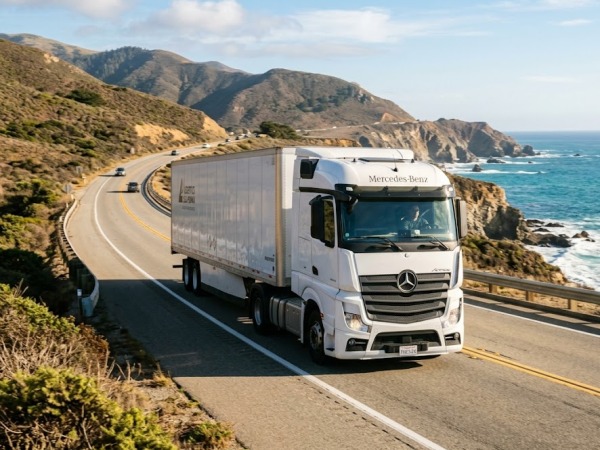
Communicating effectively from inside a truck or heavy equipment cab is a major challenge on modern job sites, commercial routes, and off-road trails. Engine noise, ambient construction sound, and distance often make standard window-yelling or phone calls unsafe and impractical.
Whether managing a fleet of commercial utility trucks, operating heavy machinery on active job sites, or outfitting an off-road overland rig, installing a dedicated Public Address (PA) and intercom system ensures instant, clear, hands-free voice communication.
This guide evaluates the top PA and intercom technologies for trucks and work vehicles in 2026. You will learn about key power requirements, weatherproof ratings, noise-canceling microphone options, and integration techniques to select the best setup for your vehicle.
| Core Insight | Practical Impact |
| Noise Cancellation is Critical | Active noise-canceling (ANC) mics and dynamic filtering prevent engine and machinery roar from drowning out broadcasts. |
| Ingress Protection Matters | Outdoor horn speakers require at least an IP66 rating to withstand high-pressure water, road salt, mud, and dust. |
| System Synergy Prevents Blown Fuses | Matching amplifier RMS output with speaker impedance (4-ohm vs 8-ohm) prevents thermal shutdown during extended operation. |
What Drives the Need for In-Vehicle PA & Intercom Systems?
In commercial fleets, utility vehicles, tow trucks, and emergency support rigs, public address systems perform vital operational functions:
- Safety & Hazard Mitigation: Directing spotters or ground crews around heavy machinery without leaving the safety of the cab.
- Crowd & Traffic Control: Allowing utility workers, escort drivers, or site supervisors to issue clear directions over high ambient noise.
- Crew-to-Cab Intercom Communication: Enabling seamless, full-duplex conversations between cab occupants and exterior workers on boom lifts, flatbeds, or utility trailers.
VEHICLE AUDIO SIGNAL FLOW

[Microphone / Headset] ---> [12V PA / Intercom Amplifier]
                                     |
                    +----------------+----------------+
                    |                                 |
            [External Horn Speaker]        [Cab / Exterior Intercom]
              (IP66 Weatherproof)             (Full-Duplex / ANC)
Top PA & Intercom Solutions for Trucks in 2026
1. High-Output 12V PA Amplifiers with Weatherproof Horns
For traditional public address needs—where the operator speaks from inside the cab to personnel outside—a standalone 12V PA amplifier paired with a heavy-duty weather-resistant horn speaker remains the most robust choice.
- Best For: Tow trucks, construction fleet vehicles, utility service trucks, and security patrols.
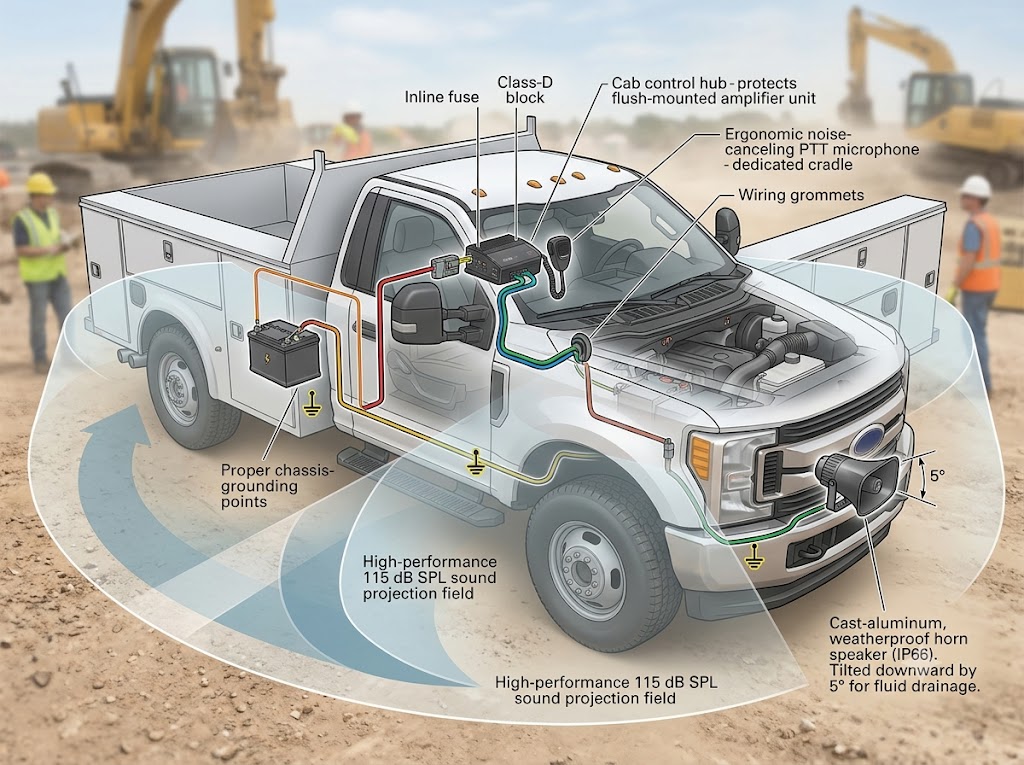
- Key Components: Compact 20W to 50W Class-D 12V amplifier, noise-canceling push-to-talk (PTT) dynamic microphone, and a cast-aluminum or ABS horn speaker.
- Why It Works: Class-D amplifiers deliver high sound pressure levels (SPL) with minimal current draw from the vehicle’s 12V electrical system.
2. Integrated CB Radio & PA Combos
For truck drivers and off-road vehicle operators who need long-range two-way radio contact along with local PA capability, CB radios with built-in PA outputs offer a space-saving 2-in-1 solution.
- Best For: Long-haul semi-trucks, agricultural vehicles, and 4×4 trail support rigs.
- Key Components: CB transceiver with an external PA jack, paired with an under-hood 8-ohm weatherproof speaker cone.
- Why It Works: Toggling a switch on the unit changes the microphone output from standard CB channel transmission to the external PA speaker, eliminating the need for duplicate microphones in tight cabs.
3. Full-Duplex Noise-Canceling Intercom Systems
When continuous two-way communication between the cab driver and outside work zones (such as bucket truck operators or rear-loader crews) is required, full-duplex intercoms excel over standard one-way PTT systems.
- Best For: Bucket trucks, crane units, waste management vehicles, and multi-operator work trucks.
- Key Components: Digital signal processing (DSP) main unit, wired or wireless DECT beltpacks/headsets, and weatherproof station boxes.
- Why It Works: Full-duplex allows both parties to speak and listen simultaneously without holding a button, while digital noise cancellation strips out high-decibel engine hums.
Critical Factors When Choosing a Vehicle PA System
When evaluating hardware for work vehicles, pay close attention to three core performance criteria:
Acoustic Output & Distortion Control
A PA speaker must produce sound levels higher than the surrounding ambient noise (typically 85–95 dB on active industrial sites). Look for systems rated at 110 dB SPL or higher measured at 1 meter.
Important: High volume is useless if the speech is distorted. Choose systems with Total Harmonic Distortion (THD) under 1% at maximum rated power.
Weather Resistance & Durability
Under-hood and bumper-mounted speakers endure rain, road slush, high temperatures, and direct pressure washing.
- IP65: Protection against multi-directional low-pressure water jets and total dust ingress.
- IP66/IP67: Recommended for exterior bumper or roof mountings exposed to heavy storms or direct pressure washing.

Voltage Compatibility & Power Protection
Standard light and medium-duty work trucks operate on a 12V DC electrical architecture, while heavy machinery and commercial rigs often run on 24V DC. Verify whether the PA amplifier accepts multi-voltage inputs (10–30V DC) or requires a dedicated step-down converter to prevent over-voltage damage.
Work Vehicle PA System Selection Matrix
| Vehicle Type | Primary Need | Recommended Setup | Ideal Speaker Rating | Est. Power Draw |
| Utility / Service Truck | Outdoor announcements & safety alerts | 30W 12V Compact PA Amp + Horn Speaker | IP66 / 115 dB SPL | 2.5A – 4.0A |
| Tow Truck / Flatbed | Driver-to-winch operator alerts | Heavy-Duty PTT PA Unit + Bumper Horn | IP67 / 118 dB SPL | 3.0A – 5.0A |
| Bucket Truck / Crane Rig | Continuous cab-to-bucket communication | Hands-Free Full-Duplex DSP Intercom | IP65 Cab & Exterior Stations | 1.5A – 3.0A |
| Off-Road / Overland Rig | Trail leader directions & emergency alerts | CB Radio with External PA Switch + Horn | IP66 / 110 dB SPL | 1.8A – 3.5A |
Best Practices for Vehicle PA & Intercom Installation
To ensure long-term reliability and eliminate electrical noise (such as alternator whine), follow these professional installation standards:
- Direct Power Wiring: Connect the amplifier’s positive power wire directly to the battery or a dedicated high-current fuse block—never tap into low-current auxiliary lighting circuits.
- Dedicated Grounding: Anchor the ground connection to the vehicle chassis using a clean, unpainted surface to prevent ground loops and audio hum.
- Sealed Connections: Use heat-shrink solder connectors and marine-grade conduit for all exterior speaker wiring beneath the chassis or under the hood.
- Speaker Placement: Mount horn speakers facing slightly downward toward the ground to prevent rain and wash water from pooling in the driver cone.
Frequently Asked Questions
Is it legal to have a PA system installed on a private truck in the USA?
Yes, installing and possessing a PA system on private trucks or work vehicles is legal across the US. However, local noise ordinances, municipal codes, and state vehicle codes strictly regulate how and when you can use them. Misusing a PA system to simulate emergency vehicle sirens, harass pedestrians, or create excessive noise in residential areas can result in traffic citations and fines.
What is the difference between a CB radio PA output and a standalone vehicle PA amplifier?
A CB radio PA output routes the CB’s internal microphone signal through an external speaker jack, relying on the CB’s small internal amplifier (usually 3–5 watts output). A standalone vehicle PA amplifier is dedicated specifically to public address, offering 20W to 50W+ of clean output power, superior noise cancellation, and dedicated gain controls for far higher volume and clarity.
How do I eliminate alternator whine or engine noise from my vehicle PA speaker?
Engine noise usually stems from a bad ground, poor wire isolation, or unstable DC voltage. Ensure your PA amplifier grounds directly to clean chassis metal, run signal wires away from heavy alternator lines, and install an inline 12V DC power noise filter if alternator whine persists during engine acceleration.
Can I connect multiple horn speakers to a single 12V PA amplifier?
Yes, provided you match the total speaker impedance (ohms) to your amplifier’s output specifications. Connecting two 8-ohm horn speakers in parallel results in a 4-ohm load, which most 12V amplifiers handle safely. Always verify your amplifier’s minimum impedance threshold before wiring multiple speakers in parallel to prevent thermal shutdown.
Optimizing Your Vehicle Communication Setup
Selecting the right PA or intercom system comes down to matching your operational needs with durable, weather-resistant hardware designed for automotive environments. Investing in high-output Class-D amplification, noise-canceling microphones, and IP-rated outdoor speakers ensures clear communication on every job site.
If you are looking to outfit your personal truck, commercial fleet, or specialized work vehicle in California, professional guidance guarantees clean wiring, zero electrical noise, and long-term durability. Sorena Car Audio provides custom vehicle audio, PA system integration, and professional wiring services tailored to your exact vehicle requirements.
Reviewed by the technical team at Sorena Car Audio. This guide reflects professional car audio and vehicle electronics knowledge, industry installation standards, and a commitment to clear, dependable vehicle communication.
We offer all car audio services
List of Services:
- DashCam
- Ambient Lighting
- Starlight
- Windows Tinting
- Armoring & Ballistic Protection
- Apple CarPlay
- Dash Upgrade
- Android Auto
- Paint Protection Film (PPF)
- Sound Deadening – Sound Proofing
- Front and Rear Parking Sensors
- Blind Spot Radars
- Car Ceramic Coating
- HD Backup Camera
- Mirror Monitor
- Subwoofer Integration
- Classic Car Audio
- Wheel Well Sound Deadening
- Marine Audio System
- Marin Audio
- Flipdown Monitor
- Bluetooth Integration
- Rear Entertainment System
- Steering Wheel Upgrade
- Car Wrapping
- Interior Suede Alcantara Wrap
- Alcantara Suede Headliner
- ECU Tuning
- Center Console Safe Installation
Leave A Comment