

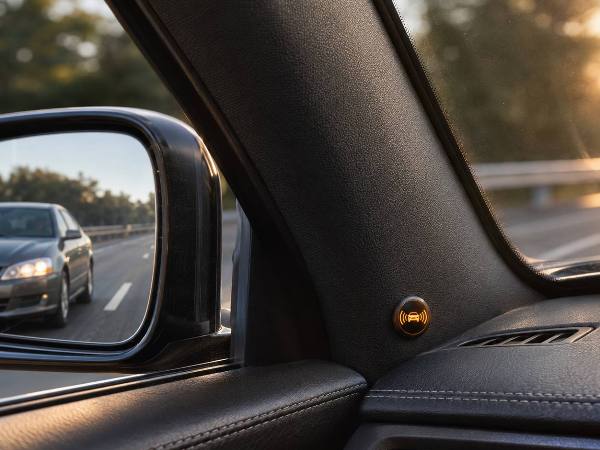
Driving on congested highways like California’s I-405 or I-5 can test even the most experienced driver’s nerves. You check your rearview mirror, glance at your side mirror, begin to merge—and suddenly hear a blaring horn from a vehicle lurking just outside your peripheral vision. That heart-stopping moment is why modern driver-assistance systems have become essential.
If you drive an older car, you might wonder: is a blind spot monitoring retrofit genuinely possible, or are you stuck relying entirely on mirror adjustments?
The short answer is yes. You can equip almost any older vehicle with advanced radar detection systems that match—or even outperform—standard factory setups. In this guide, we break down how aftermarket blind spot detection works, compare radar vs. sensor-based systems, and show you how to safely upgrade your vehicle’s safety profile.
Key Takeaways at a Glance
| Feature / Consideration | Radar-Based Retrofit | Budget Ultrasonic Sensor Kit | Factory OEM System |
| Detection Technology | 24GHz or 77GHz Microwave Radar | Ultrasonic Proximity Sensors | Microwave Radar + Optical Cameras |
| Bumper Modification | Hidden behind bumper (No drilling) | Visible holes drilled into bumper | Concealed behind bumper fascia |
| Range & Accuracy | 35–100+ feet; detects speed difference | 6–10 feet; detects static proximity | 50–150 feet; integrated CAN bus |
| Adverse Weather Performance | Reliable in rain, fog, and dust | Prone to false alarms from rain/dirt | Excellent |
| Installation Complexity | Moderate to Advanced (Requires precision) | Moderate DIY | Built at factory |
How Does a Blind Spot Monitoring Retrofit Work?
A factory blind spot system uses sensors integrated into the rear quarters of the chassis to monitor approaching traffic. A blind spot monitoring retrofit brings this same functionality to older models using aftermarket hardware engineered for universal or vehicle-specific integration.
The system relies on three core components:
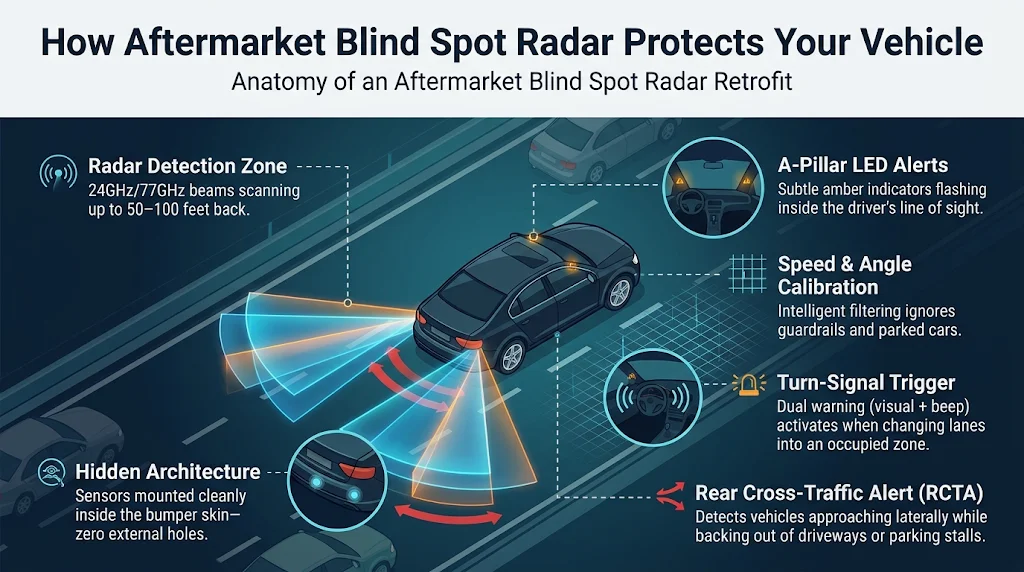
- Rear-Mounted Sensors: Units mounted inside or on the rear bumper beam that scan traffic in adjacent lanes.
- Visual LED Indicators: Discrete warning lights placed inside the cabin (usually on the A-pillars or behind side mirror glass).
- Auditory Alert Buzzer: A tone generator that sounds only when you engage your turn signal while an object occupies your blind zone.
According to research by the National Highway Traffic Safety Administration (NHTSA), advanced driver assistance technologies significantly decrease lane-change crashes and severe side-impact collisions.
Radar vs. Ultrasonic Systems: Choosing the Right Retrofit
When shopping for an aftermarket kit, you will encounter two main technologies: microwave radar kits and ultrasonic sensor kits.
[Bumper Radar Sensors] ---> [Intelligent Processing ECU] ---> [Turn Signal Trigger]

|

+----------------------+----------------------+

|                                             |

[A-Pillar LED Flash]                         [Audible Tone Warning]
(Object in Blind Zone) (Active Turn Signal + Object)
- Microwave Radar Kits (Recommended)
High-end retrofits use 24GHz or 77GHz microwave radar. These are mounted completely hidden behind your rear bumper fascia, preserving your car’s factory exterior. Radar systems calculate both object proximity and rate of approach, filtering out stationary roadside objects like guardrails and trash bins.
- Pros: Clean OEM look (no visible sensors), long-distance detection, reliable in heavy rain or fog.
- Cons: Higher component cost, requires strict angle alignment during installation.
- Ultrasonic Sensor Kits (Budget Alternative)
Ultrasonic kits use round parking sensors that require drilling multiple holes into your rear bumper. They measure sound wave reflection, meaning their functional range is typically limited to under 10 feet.
- Pros: Inexpensive upfront hardware cost.
- Cons: Visible bumper cutouts, frequent false positives, and limited range at freeway speeds.
If you are upgrading an enthusiast car or a clean daily driver, an invisible, radar-based setup is the standard worth investing in. Check out our guide on how custom car electronics integrate with factory harnesses for a closer look at modern wiring standards.
Why California Drivers Need Blind Spot Radar
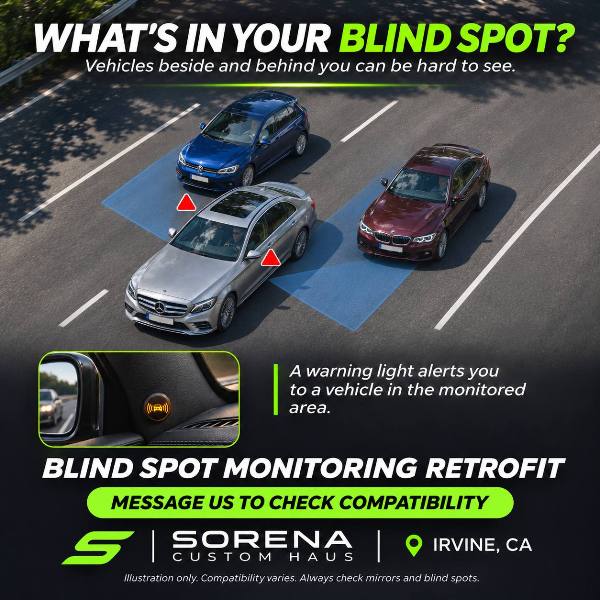
Driving dynamics in California present unique road risks. With multi-lane freeways, heavy rush-hour traffic in Los Angeles and Orange County, and legal motorcycle lane splitting, blind spots are constantly occupied.
- Motorcycle Lane Splitting: California is known for dense motorcycle traffic navigating between lanes. A radar system calibrated to spot rapid lane changes gives you vital seconds of warning before you initiate a lane change.
- High-Speed Merging: Transitioning between complex interchanges requires checking multiple lanes simultaneously. Having visual LED confirmation directly in your peripheral vision reduces head-turning fatigue.
- Rear Cross-Traffic Detection: Many premium radar retrofit kits double as Rear Cross-Traffic Alert (RCTA) systems, warning you of oncoming cross traffic when reversing out of crowded beach or shopping center parking lots.
Pairing radar with modern camera systems provides complete awareness. You can read more about integrating front and rear dash cams with driver safety systems for comprehensive vehicle coverage.
What Does Installation Involve?
A reliable blind spot monitoring retrofit requires more than simply tapping a 12V wire:
- Bumper Removal & Cleaning: The rear bumper cover is unclipped to access the structural crash bar and interior bumper corners.
- Sensor Angle Calibration: Microwave radar modules must sit at precise vertical and horizontal angles (usually 20° to 25° relative to the vehicle’s centerline). Misalignment will result in blind spot gaps or repeated false warnings from the road surface.
- Speed & Turn Signal Integration: The ECU connects to left/right turn signal circuits and reverse lights. Some systems integrate an OBD-II interface or GPS module to prevent alerts below specific speeds (such as under 15 mph), keeping the system quiet in drive-through lanes.
- OEM-Style Interior Placement: High-grade installers mount warning LEDs into the factory A-pillar trim or integrate specialized mirrors with etched LED warning icons.
Because calibration directly impacts road safety, professional installation is strongly advised over DIY attempts.
Frequently Asked Questions
Can you install blind spot monitoring on any older car?
Yes. Universal microwave radar systems can be fitted to almost any passenger car, truck, or SUV, provided the rear bumper cover is plastic or fiberglass (radar cannot transmit through full steel bumpers found on heavy-duty classic trucks).
Does a blind spot retrofit look factory-made?
A high-end installation looks completely stock. The radar modules remain concealed behind the rear bumper, and LED indicator lights are fitted seamlessly into the A-pillar plastic moldings or integrated behind replacement side-mirror glass.
Will the radar alert me while stopped at traffic lights?
Quality systems feature GPS speed modules or CAN-bus sensing that deactivate audible warnings below 15 mph. This prevents false alerts when stopped at intersections next to turning vehicles or cyclists.
Is professional installation necessary?
While experienced DIYers with 12V automotive wiring experience can tackle installation, setting correct sensor angles is critical. Slight alignment errors cause missed detections or constant false alarms at highway speeds.
Upgrade Your Vehicle’s Safety with Sorena Car Audio
Adding modern safety technology shouldn’t require trading in a vehicle you love. A professional blind spot monitoring retrofit gives your daily driver or custom build the exact collision-avoidance capabilities found on brand-new luxury models.
If you are located in Southern California and want seamless, OEM-grade radar integration calibrated specifically for your vehicle, trust local specialists who understand precision 12-volt integration.
Explore the expert Sorena Car Audio Blind Spot Radar Service in Irvine, California to schedule an evaluation and protect yourself and your passengers on every drive.
Leave A Comment