

Why Professional Installation Saves Money in the Long Run
If you’re a true car enthusiast—the kind who has meticulously chosen your audio setup, upgraded your performance parts, or spent hours perfectly detailing your finish—you know that preserving your vehicle is not just maintenance, it’s a commitment. You’ve invested thousands into your ride’s appeal, but what about the most visible part: the paint?
One rock chip on a freeway, one poorly parked cart in a lot, or one careless wash can erase that flawless finish. That’s where Paint Protection Film, or PPF, comes in. But when you start researching it, the first thing that hits you is the cost. Paint Protection Film (PPF) Pricing can vary wildly, leading many drivers to eye cheaper DIY kits or budget installers.
In this comprehensive guide, we’re going to pull back the curtain on the cost of PPF. We’ll show you why a professional, high-quality installation—especially in high-value markets like California—is not an expense, but a crucial investment that locks in your car’s value and saves you a significant amount of money and heartache over the vehicle’s lifespan.
| Key Takeaways at a Glance | |
|---|---|
| Primary Cost Range (Full Front) | $1,500 to $8,000+ (depending on vehicle and location) |
| Biggest Cost Factor | Installer Expertise & Labor (Not just the material) |
| DIY Risk | Bubbles, misalignments, and peeling, leading to a costly re-do. |
| Long-Term Savings | Eliminates need for expensive paint correction and repainting. |
| Value to Enthusiasts | Preserves that “fresh-from-the-detailer” look for years. |
Beyond the Sticker Price: Understanding the True PPF Investment
When you see a quote for Paint Protection Film (PPF) Pricing, it’s easy to focus solely on the dollar amount. However, to truly understand the value, you must break down what that price covers. You are not just paying for a sheet of transparent polyurethane; you are paying for three key elements:
- The Material (The Film): High-end PPF (e.g., films from XPEL or SunTek) is made from thermoplastic polyurethane (TPU). This material is elastic, durable, and, critically, often self-healing. It’s UV-resistant (meaning it won’t yellow) and comes with a 5- to 10-year manufacturer’s warranty. Cheaper, off-brand films often lack these properties and break down faster.
- The Technology (The Tools): A professional shop uses state-of-the-art tools, including large-format plotters and computer-aided design (CAD) software. This allows them to use pre-cut, precision patterns that fit your specific make and model perfectly—eliminating the need for risky, on-the-car knife trimming.
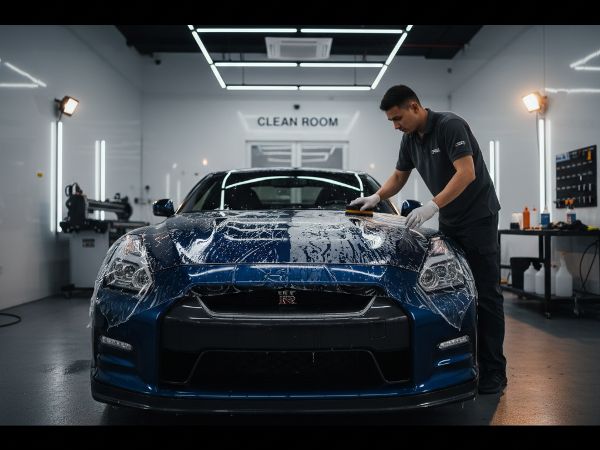
- The Craftsmanship (The Expertise): This is the single most important factor. The installer’s experience ensures a dust-free environment, seamless edge wrapping (where the film is tucked behind the panel for an invisible look), and flawless alignment without bubbles, creases, or lift.
The Current Landscape of PPF Pricing in the US
While prices fluctuate based on your specific area, installer reputation, and vehicle complexity, here are the general price ranges you can expect for a high-quality job in the US:
Note on California Pricing: Given the higher cost of living and specialized labor rates in major metropolitan areas like Los Angeles and the Bay Area, expect your local Paint Protection Film (PPF) Pricing to often fall on the higher end of these national averages.
The 5 Key Factors Driving Up PPF Cost (And Why They’re Worth It)
Why does one shop quote $1,500 and another $3,000 for a “full front end”? It almost always comes down to the details that determine the quality and longevity of the installation.
1. Vehicle Size and Complexity
A large SUV or truck requires significantly more film material than a compact coupe. Furthermore, a sports car with complex curves, vents, and sharp edges (like a Corvette or a Porsche) demands more time and a custom installation approach. More material and more labor time translate directly to higher cost.
2. The Film’s Quality and Warranty
As mentioned, not all films are created equal. Premium brands invest heavily in research and development to produce films that resist yellowing, self-heal minor scratches when exposed to heat, and maintain a high-gloss finish. These films carry better, longer warranties (often 10 years), which is a cost baked into the price but provides major long-term protection for your investment.
3. The Installer’s Experience (The “Surgeon’s Fee”)
This is the biggest differentiator. A true professional installer is like a surgeon for your car. They charge more because they:
- Work in a climate-controlled, dust-free bay (a crucial environmental factor).
- Perform meticulous paint correction before installation (removing swirl marks and imperfections so they aren’t sealed under the film). This can add $400–$800+ to the quote but is non-negotiable for a flawless finish.
- Master edge wrapping and disassembly/reassembly (removing emblems, lights, or trim to ensure no exposed edges).
4. Pre-Cut Kits vs. Custom Installation
- Pre-Cut Kits: Faster, less material waste, and less risky as no cutting happens on the car. This is standard for most high-quality shops.
- Custom/Bulk Installation: Required for highly unique vehicles or those seeking the absolute most coverage (i.e., wrapping every edge possible). This is far more labor-intensive and costly.
The DIY Deception: Why Cheaper Upfront Costs Lead to Costly Failures
The internet is flooded with DIY PPF kits that promise professional results for a fraction of the cost—sometimes as low as $200 for a front bumper kit. For a dedicated enthusiast, the temptation to save money and do it yourself is real.
However, the savings are almost always an illusion.
Applying PPF is an art form that requires specialized skills, tools, and a perfect environment. Ask yourself this: Do you have a sealed, contamination-free workspace? Do you have the experience to perfectly stretch and align a large, sticky film panel around a complex curve without creasing it?
| DIY Risk | Long-Term Financial Consequence |
|---|---|
| Bubbling/Peeling | Requires removal, cleaning, and purchase of a new film kit (wasting the first one). |
| Misalignment/Visible Edges | Dirt, wax, and contaminants collect on the exposed edge, causing the film to lift or show an unsightly line. |
| Knife Marks on Paint | Accidental cuts on the clear coat or paint when trimming film on the vehicle—an expensive paint repair. |
| Yellowing/Hazing | Caused by low-quality film that lacks proper UV protection. You pay for removal and replacement. |
In nearly every case of a botched DIY job, the driver ends up having to pay a professional to remove the failed film (which can damage the paint further) and then pay for a new, correct installation. The “savings” vanish immediately, and the final cost is significantly higher than if they had just hired a professional from the start.
The Long-Term Financial Win: Professional PPF is Preservation
The true financial benefit of professional PPF installation isn’t the upfront protection—it’s the long-term preservation of your vehicle’s resale value and the avoidance of catastrophic repair costs.
Preserving Resale Value (Especially in the Car Enthusiast Market)
For your audience of car enthusiasts in California, the resale market is competitive and demanding. When it’s time to sell or trade in your vehicle, the difference between a pristine, factory-condition paint job and one riddled with rock chips, scratches, and swirl marks is thousands of dollars.
A professionally installed, high-quality PPF wrap maintains a flawless finish for 5–10 years. A buyer sees a protected vehicle that has been meticulously cared for, justifying a higher price. The PPF pays for itself by preventing the depreciation that comes from road wear.
Eliminating the Need for Costly Paint Correction
Without PPF, your paint will inevitably incur damage. Minor scratches can be buffed out with a professional paint correction service, which itself can cost $500 to $1,500 every few years, depending on the damage. Rock chips, however, often require panel repainting.
“A full panel respray of a bumper or a hood can easily cost between $800 and $1,500, or more for high-end or specialty paints.”
By absorbing the impact of rock chips and preventing swirls, PPF completely negates the need for this expensive, time-consuming work. You save money by preventing damage, not by repairing it. Think of the PPF cost as paying for 5–10 years of zero paint damage repair bills.
Protecting Your Investment from the California Environment
- Freeway Debris: The constant threat of road construction aggregate and chips on high-speed CA highways.
- UV Exposure: Intense, year-round sun that causes paint to oxidize and fade. PPF provides a vital layer of UV protection.
- Contaminants: Road tar, bird droppings, and acid rain, which can etch and damage unprotected clear coats.
The investment into PPF is a direct countermeasure against the specific environmental threats that accelerate paint degradation, ensuring the aesthetic value of your car is locked in for years. For an enthusiast, this peace of mind is invaluable.
Frequently Asked Questions (FAQ) About PPF Cost and Value
Is Paint Protection Film really worth the high price tag?
Yes, for high-value vehicles, new cars, and enthusiast vehicles, it is absolutely worth the price. The cost of a professional PPF installation is significantly less than the cost of a high-quality respray for a single damaged panel, or the thousands of dollars in lost resale value due to chips and scratches. It is the ultimate preventative measure for your paint finish.
How long does a quality PPF installation last?
High-end, professionally installed PPF (from brands like XPEL, 3M, or SunTek) typically comes with a manufacturer’s warranty of 5 to 10 years. This warranty covers issues like yellowing, bubbling, and cracking. A DIY or low-quality installation may fail in less than two years.
Should I get PPF or a Ceramic Coating?
They offer different levels of protection. PPF provides a thick, physical barrier that stops rock chips, deep scratches, and impact damage—protection a Ceramic Coating cannot match. Ceramic coating, which typically costs $500–$2,000 for a professional job, is a chemical layer that provides hydrophobic properties and enhanced gloss. Many enthusiasts get the best of both worlds by having PPF installed first, and then applying a Ceramic Coating over the film for easy cleaning and shine.
Does PPF installation cost more for luxury or exotic cars?
Yes, for a few reasons. First, exotic and luxury cars often have more complex body panels, vents, and curves, requiring significantly more labor and skill for custom edge-wrapping. Second, the paint material itself is typically more expensive to repair, increasing the insurance and liability cost for the shop. Finally, many high-end shops specializing in these vehicles simply command a premium for their guaranteed expertise.
The Final Verdict on PPF Pricing
For any car enthusiast in the US, especially those in high-traffic, high-value regions like California, the cost of PPF is directly proportional to the long-term value it preserves. Choosing a cheaper, unproven installer or attempting a DIY job is gambling with your vehicle’s most valuable asset: its finish.
When considering the Paint Protection Film (PPF) Pricing quote, remember you are investing in:
- A decade of rock chip immunity.
- The preservation of factory paint condition.
- An immediate boost to future resale value.
Your ride deserves the best protection. Don’t compromise quality for a short-term discount. Invest in the expertise that delivers a flawless, lasting barrier.
Ready to lock in your car’s perfect finish and protect your investment?
Consult our PPF professionals today to get a precise quote tailored to your vehicle and driving needs!
We offer all car audio services
List of Services:
- DashCam
- Ambient Lighting
- Starlight
- Apple CarPlay
- Android Auto
- Paint Protection Film (PPF)
- Sound Deadening – Sound Proofing
- Front and Rear Parking Sensors
- Blind Spot Sensors
- HD Backup Camera
- Mirror Monitor
- Subwoofer Integration
- Classic Car Audio
- Wheel Well Sound Deadening
- Marine Audio System
- Marin Audio
- Flipdown Monitor
- Bluetooth Integration
- Rear Entertainment System
- Windows Tinting
- Steerig Wheel Upgrade
- ECU Tuning
- Car Wrapping
- Dash Upgrade
- Interior Suede Alcantara Wrap
- Alcantara Suede Headliner Installation
- Center Console Safe Installation
Leave A Comment