


If you’re a car audio enthusiast in California, you understand that your sound system is a sanctuary. You’ve dialed in the bass for your favorite tracks and chased that perfect, wide soundstage for music. But what happens when you switch from a power anthem to a compelling true-crime podcast or an immersive audiobook? Suddenly, the crystal-clear music setup can turn into a muddy, sibilant mess that makes following a conversation a chore.
The reality is that From Podcasts to Premium Sound requires a distinct approach. Voice content lives in a completely different frequency range than music, and your car’s acoustics—a notorious challenge—can become your worst enemy.
This guide, written specifically for dedicated car audio fans like you, will break down the science of voice clarity, reveal the exact EQ settings needed, and show you the system upgrades that will transform your daily commute into an unparalleled, distraction-free listening experience. We’re going beyond factory settings to unlock the true potential of your system for spoken word content.
Key Takeaways at a Glance
| Aspect | Music Focus (Default) | Spoken Word Focus (Optimization Goal) | Key Action for Clarity |
| Primary Frequency | Lows (Bass) & Highs (Treble) | Mid-Range (250 Hz – 4 kHz) | Boost the mid-range gently; reduce bass. |
| Acoustic Challenge | Wide Soundstage & Impact | Reflections & Muddy Mids | Use Time Alignment/DSP to focus the sound. |
| Ideal Component | Subwoofers & Powerful Tweeters | High-Quality Mid-Range Drivers | Upgrade to dedicated component speakers with excellent mid-drivers. |
| EQ Setting Philosophy | V-Shape (Scooped Mids) | Flat-to-Vocal-Forward | Prioritize clarity and intelligibility. |
| External Noise | Competitor to volume | Masker of low-level detail | Apply sound-deadening material. |
The Science of Voice: Why Spoken Word is Different
To achieve truly premium sound for voice, you must first understand where the human voice lives in the audio spectrum. It’s not in the deep rumble of the bass or the airy sparkle of the cymbals—it’s in the middle.
The Critical Mid-Range Frequencies
The core of human speech, the range that dictates intelligibility (how easily you can understand the words), falls between approximately 250 Hz and 4,000 Hz (4 kHz).
- 250 Hz to 500 Hz (The “Warmth” Zone): Too much here and voices sound boomy or muddy. Too little, and they sound thin.
- 500 Hz to 2 kHz (The “Body” Zone): This is the heart of vocal power and fundamental frequencies. Crucial for making voices feel present and clear.
- 2 kHz to 4 kHz (The “Presence” Zone): This range governs consonants (like $p, t, s, k$) and is vital for detail and clarity. Boost it slightly, and the speaker moves forward; cut it, and they sound distant.
In music-focused setups, it’s common to run a “V-shaped” EQ—boosting the bass and treble while scooping out the mids. This is great for impact, but it’s a disaster for podcasts and audiobooks, as you are actively cutting the frequencies where the spoken word lives!
The Essential System Tweaks: EQ and DSP
The single biggest improvement you can make for spoken word clarity often doesn’t cost a dime: it’s re-tuning your existing Digital Signal Processor (DSP) or head unit Equalizer (EQ).
1. The Mid-Range Equalizer Reset
Your goal here is to flatten the EQ curve and then make targeted, subtle adjustments to bring the vocals forward without introducing harshness or “boxiness.”
- Bass Reduction (Below 100 Hz): Set bass to flat (0) or even a slight cut (-1 to -3). Subwoofers are largely irrelevant for voice and only introduce distracting low-frequency rumble (often called “mud”).
- Targeted Mid-Range Boost (500 Hz to 2 kHz): This is where you bring the voice to life. Try a gentle +2 to +4 dB boost across this spectrum. Always use small adjustments (1-2 dB) at a time and listen for the sweet spot.
- Taming Harshness (2 kHz to 4 kHz): If the voices sound too sharp or sibilant (harsh “s” sounds), you might need a slight cut here (-1 to -3 dB) to compensate for reflections off the windshield and dash, which often exaggerate these high-mids.
- High-End Detail (Above 8 kHz): Keep this area relatively flat. Since podcasts are often not recorded in high fidelity, boosting this can amplify recording artifacts or hiss without adding meaningful clarity.
2. Time Alignment and Imaging
The car cabin is acoustically asymmetrical. You are almost always closer to the driver-side speakers than the passenger-side ones. This causes the sound from the near speaker to arrive first, pulling the soundstage—and the speaker’s voice—to one side.
A DSP with Time Alignment is crucial here. By delaying the speakers closest to you, you can ensure that the sound from all speakers reaches your ear simultaneously.
Pro Tip: Use a dedicated measurement microphone and software (like Smaart, often used by professional installers) or a quality app, but even an informed manual adjustment based on measurement can transform your experience. Getting the voice centered and focused directly in front of you creates a more natural and less fatiguing listening environment.
Overcoming California Road Noise: The Acoustic Battle
You can have the most expensive speakers and the most precise EQ, but if your car is loud, all that clarity is lost. Road noise, wind, and engine drone are the biggest enemies of spoken word content, as they directly compete with the vocal frequencies.
3. Sound Dampening is Not Just for Bass
For a true premium audio experience, noise isolation is just as important as component quality.
- The First Barrier: Doors and Floor: The most impactful upgrade is applying high-quality Sound Damping Material (like butyl rubber sheets) to the inside of your door panels, floor, and trunk. This heavy material converts vibration into heat, reducing panel resonance and structural noise.
- The Second Barrier: Noise Absorption: Add Closed-Cell Foam (CCF) and Mass Loaded Vinyl (MLV) over the damping material on the floor and doors. This acts as a true sound barrier, absorbing airborne noise (like tire and road rumble) before it enters the cabin.
- The Result: A quieter cabin means you don’t have to turn the volume up as high, which, in turn, reduces system distortion and allows you to perceive the subtle nuances of spoken word content at a comfortable level. This is non-negotiable for serious car audio fans.
The Component Deep Dive: Upgrades That Deliver Clarity
While EQ adjustments are a great start, certain hardware changes are necessary to achieve true premium sound. For spoken word, the focus shifts away from raw power and toward fidelity and accurate mid-range reproduction.
4. Upgrading the Speaker System
Factory speakers often prioritize durability and low cost over detailed mid-range response. For voice clarity, look for component speaker sets with excellent mid-range drivers.
- Focus on the Mid-Drivers: Seek out component speakers that boast high-quality cone materials (like treated paper, carbon fiber, or silk) designed for quick, accurate movement. A mid-driver that excels in the 500 Hz to 2 kHz range will deliver a vocal presence that is immediate and lifelike.
- Tweeter Selection (The High-Mids): Choose soft dome tweeters over harsh metal ones. Soft dome tweeters (often silk) tend to have a smoother, less aggressive high-frequency response, which helps prevent the sibilance and harshness that often plague spoken word playback in reflective car interiors.
5. Leveraging a Dedicated Digital Signal Processor (DSP)
A standalone or integrated DSP is the ultimate tool for this kind of specific audio optimization. Why? Because it offers the granular control you need.
- Parametric EQ (P-EQ): Unlike a basic graphic EQ with preset frequency bands (like 80 Hz, 1 kHz, 10 kHz), a P-EQ lets you select any frequency, determine the amount of boost/cut, and control the width of the adjustment (the Q-factor). This allows you to surgically remove an annoying, boomy resonance at 320 Hz without affecting nearby, critical frequencies.
- Saving Presets: The best feature for a mixed-content listener is the ability to save multiple profiles. You can create a “Rock/Hip-Hop” V-shape profile and a dedicated “Podcast/Audiobook” flat-to-vocal-forward profile, switching between them with the press of a button.
6. Source Quality Matters (GIGO Principle)
The oldest rule in audio is “Garbage In, Garbage Out” (GIGO). You cannot make a poor-quality source file sound truly premium.
- Higher Bitrate is Better: For audiobooks and podcasts, look for sources that stream or download at a higher bitrate. While music enthusiasts seek lossless formats (FLAC), for spoken word, ensuring your source material is at least 128 kbps or higher (ideally 192 kbps) for MP3 or AAC will prevent a thin, digitized sound that makes listening a chore.
- Check the Producer’s Quality: Some podcasts are simply recorded poorly. If a show’s audio quality is consistently bad, even the best system can only do so much. A premium system, however, will expose these flaws, helping you decide which content is worth the time!
Case Study: Applying the Strategy
Let’s imagine you’re cruising down the 405 freeway in Los Angeles, listening to a 20-hour audiobook.
- Preparation: You have sound deadening in your doors and floor, keeping the road noise at bay.
- EQ Profile: You select your “Vocal Clarity” preset on the DSP. The bass at 80 Hz is cut by -2 dB, the mid-range at 1.5 kHz is boosted by +3 dB, and the high-end at 8 kHz is flat.
- Time Alignment: The DSP has introduced a tiny delay (a few milliseconds) to your driver-side speakers, ensuring the sound from the far speakers reaches your ear at the same time.
The result is a soundstage where the narrator’s voice is perfectly centered in front of you, clear, present, and free of the boomy, distracting rumble that plagues unoptimized car systems.
Infographic Idea:
Title: The Car Audio Fan’s Frequency Map: Music vs. Voice
Design Concept: A side-by-side graphic of a 10-band equalizer slider with two different curves overlaid. The background should subtly feature a map of California highways.
Key Data Points:
- Music EQ (V-Shape): Bass (60-80 Hz) at +4 dB; Mids (1-2 kHz) at -2 dB; Treble (12-16 kHz) at +3 dB.
- Voice EQ (Vocal-Forward): Bass (60-80 Hz) at -2 dB; Mids (1-2 kHz) at +4 dB; Treble (12-16 kHz) at 0 dB.
- Voice Clarity Range: Highlight the 500 Hz – 4 kHz range in a bright color.
- Acoustic Enemy: Show an arrow pointing to the windshield, labeled “Windshield Reflections: Source of Sibilance.”
- Pro Solution: Image of a DSP/Head Unit with a caption: “DSP Time Alignment: Centers the Voice for a Focused Experience.”
Frequently Asked Questions (FAQ)
Do I need to turn my subwoofer off for podcasts and audiobooks?
You do not necessarily need to turn it off, but you should drastically reduce its gain and/or lower the crossover frequency. Since the human voice contains almost no information below 100 Hz, the subwoofer only adds distracting, non-vocal rumble. A good dedicated DSP preset should handle this by simply cutting the output to the subwoofer channel.
What is the most effective low-cost upgrade for better spoken word audio?
The most effective low-cost upgrade is sound deadening your front doors combined with a manual EQ reset. Sound deadening reduces structural noise that masks vocals, and the EQ reset targets the critical mid-range frequencies, maximizing the clarity of your existing speakers for free.
Why do some factory car systems seem to handle spoken word better than my expensive aftermarket setup?
Factory systems often include a basic form of built-in Digital Signal Processing (DSP) and fixed equalization specifically designed to counteract the vehicle’s acoustic challenges and make generic content sound acceptable. Your aftermarket system has higher potential but requires professional tuning (Time Alignment, P-EQ) to reach that potential, especially for nuanced content like spoken word.
Should I use the “Loudness” or “Bass Boost” features on my head unit?
No. Avoid these features entirely for spoken word content. “Loudness” aggressively boosts the low and high frequencies, creating the exact V-shape EQ curve that cuts the critical mid-range where the voice lives. “Bass Boost” only adds unnecessary, muddy low-end rumble. Keep these features disabled to maintain clarity.
Conclusion: Tuning for the Text
As a car audio enthusiast, your journey is one of continuous refinement, and achieving true From Podcasts to Premium Sound is the final frontier of car audio excellence. It’s about shifting your focus from the impact of a bass drum to the clarity of a whispered confession. It requires discipline—to cut the bass, embrace the mid-range, and utilize the sophisticated tools of the DSP to conquer the unique acoustic battleground of your vehicle.
By prioritizing the 500 Hz to 2 kHz range, investing in targeted sound dampening, and using a high-fidelity mid-driver, you won’t just hear the words; you’ll feel the speaker’s presence, transforming your daily drive into an intimate, professional-grade listening session.
Ready to transform your vehicle into the ultimate mobile listening environment for every kind of content? Contact Sorena Car Audio today for a professional, California-based acoustic analysis and tuning consultation.
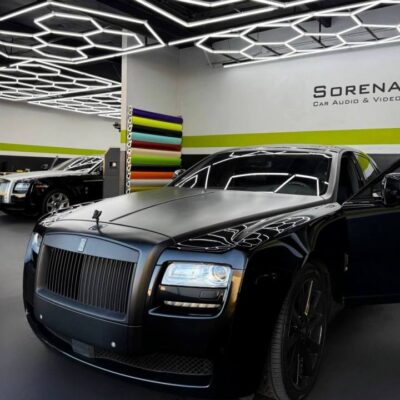
We offer all car audio services
List of Services:
- DashCam
- Ambient Lighting
- Starlight
- Apple CarPlay
- Android Auto
- Paint Protection Film (PPF)
- Sound Deadening – Sound Proofing
- Front and Rear Parking Sensors
- Blind Spot Radars
- HD Backup Camera
- Mirror Monitor
- Subwoofer Integration
- Classic Car Audio
- Wheel Well Sound Deadening
- Marine Audio System
- Marin Audio
- Flipdown Monitor
- Bluetooth Integration
- Rear Entertainment System
- Windows Tinting
- Steerig Wheel Upgrade
- ECU Tuning
- Car Wrapping
- Dash Upgrade
- Interior Suede Alcantara Wrap
- Alcantara Suede Headliner Installation
- Center Console Safe Installation
Leave A Comment